Research interests
Research Summary
Humans are exposed to complex mixtures of millions of synthetic and natural compounds. These chemicals can have beneficial or detrimental effects on health, depending on how they interact with ~20,000 human proteins. My group’s research focuses on systematically understanding interactions between chemicals and human proteins at both the exposome and proteome levels. We aim to dissect the billions of xenobiotic-protein interactions by focusing on two major research directions: 1) We aim to develop bioanalytical methods to identify xenobiotics binding to key proteins on the exposome and proteome level, termed as environmental Chemical-Protein Interaction Network (eCPIN). 2) We aim to combine our large datasets and computational models for rational design of environmentally friendly and bioactive compounds.
Xenobiotics-protein interactome in humans
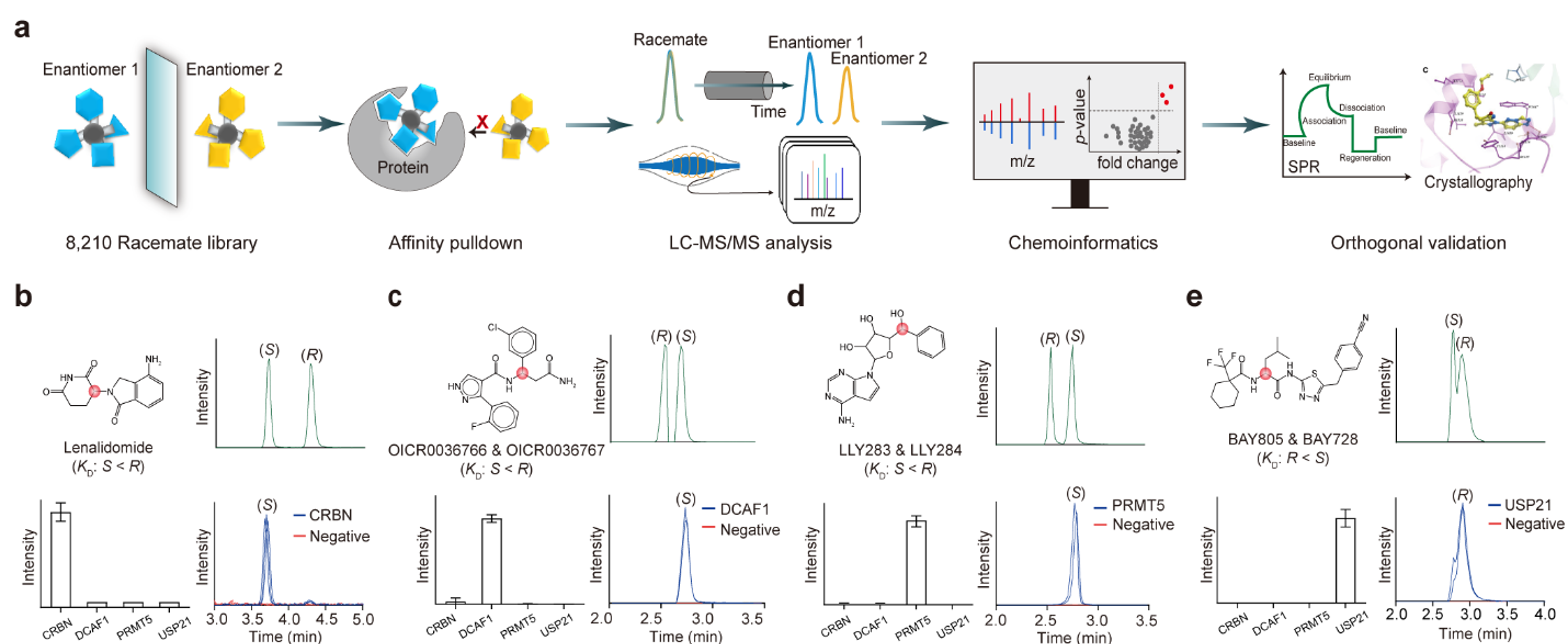
My group developed a protein-guided nontargeted analysis method, for the in situ identification of xenobiotics binding to proteins. Results from its development and use have identified >150 novel toxicants binding to PPARs (ES&T, 2016; 2023), Liver X receptor (EHP, 2019), human liver fatty acid binding protein (ES&T, 2020, PNAS 2026), TTR (ES&T, 2023; 2024), Nrf2-Keap1 protein complex (PNAS, 2020), and ERRγ (Science Advances, 2022). Encouraged by this success, we recently developed an enantioselective protein affinity selection mass spectrometry (E-ASMS) method, which facilitates the scalable discovery of drug hits for novel protein targets with unprecedented throughput and sensitivity (Nat. Commun., 2025). Most excitingly, in the next 5-10 years, we aim to expand the screening campaign to thousands of human proteins (see our perspective paper, Nature Review Chemistry, 2025).
Identification of bioactive natural and endogenous chemicals
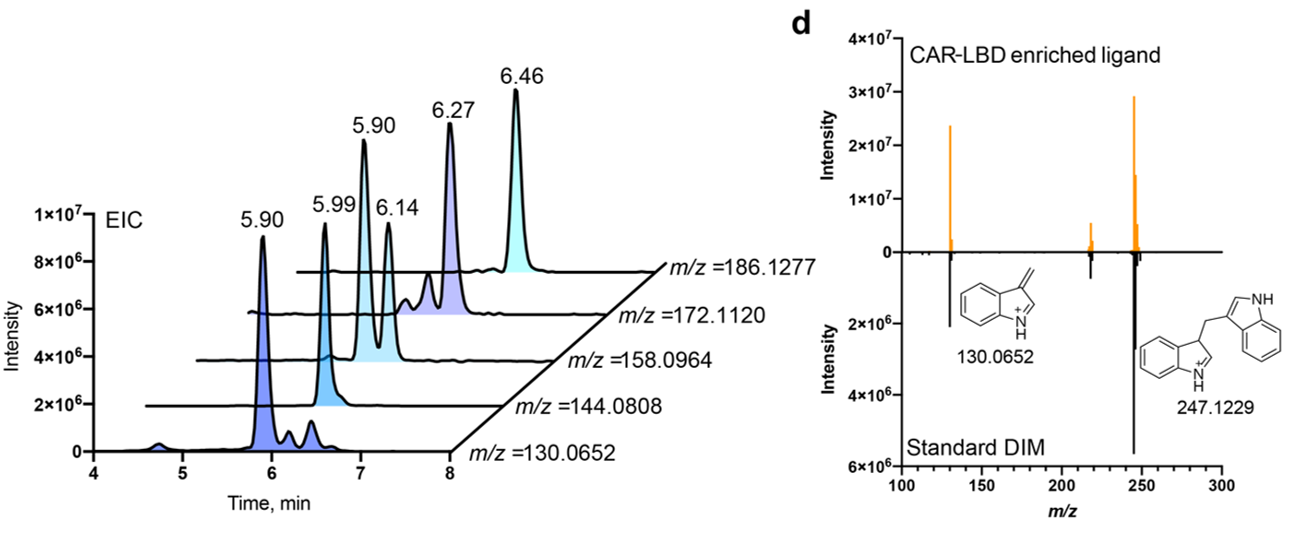
My group recently employed our protein-guided untargeted metabolomics approach to identify endogenous or natural ligands binding to human proteins. For instance, we identified 7(S)-HDHA as the predominant endogenous ligand in brain tissues that bind to PPARα (Science Signaling, 2022). Additionally, we discovered indole-derived metabolites binding to the CAR protein, which were subsequently found to be generated by the gut microbiome (Nat. Commun., 2024; Nat. Commun., 2025; Nat. Microbiol., 2026). More recently, we leveraged the high-throughput capabilities of our approach to systematically profile interactions between endogenous metabolites and approximately 600 essential genes and transcription factors in E. coli (Cell, 2025).
Identification of protein targets with chemoproteomics
Our group has been integrating chemoproteomics, synthetic chemistry, and bioanalytical chemistry to elucidate the toxicity mechanisms of various toxicants (PNAS 2020; ES&T, 2016, 2021, 2022, 2026). Notably, we pioneered a label-free chemical proteomics method, termed Target Identification by Ligand Stabilization (TILS). Using this method, we identified FabI as the protein target of 6OH-BDE47 (ES&T, 2016) and further uncovered this as a novel chemical offence pathway within the marine sponge microbiome (ES&T, 2022). More recently, we are applying similar approaches to identify the protein targets of 6PPD-Quinone (ES&T, 2024; 2025).

Computational modeling of protein-chemical interactions
By integrating high-throughput approaches and large datasets generated in our group, we aim to develop machine learning (ML) and other computational models for the accurate prediction of protein–chemical interactions. We are also interested in leveraging our extensive mass spectrometry (MS) datasets to develop MS2X machine learning models for chemical structure and property prediction. This will be achieved in collaboration with talented medicinal chemists and ML collaborators (see our perspective paper, Nature Reviews Chemistry, 2025). To facilitate collaborative, community-wide ML development, we will make all datasets openly available through AIRCHECK (Artificial Intelligence-Ready CHEmiCal Knowledge Base), a cloud platform recently established by my colleague Benjamin Haibe-Kains's group at the Structural Genomics Consortium (SGC).
